FastAPI中的依赖注入与数据库事务管理
title: FastAPI中的依赖注入与数据库事务管理
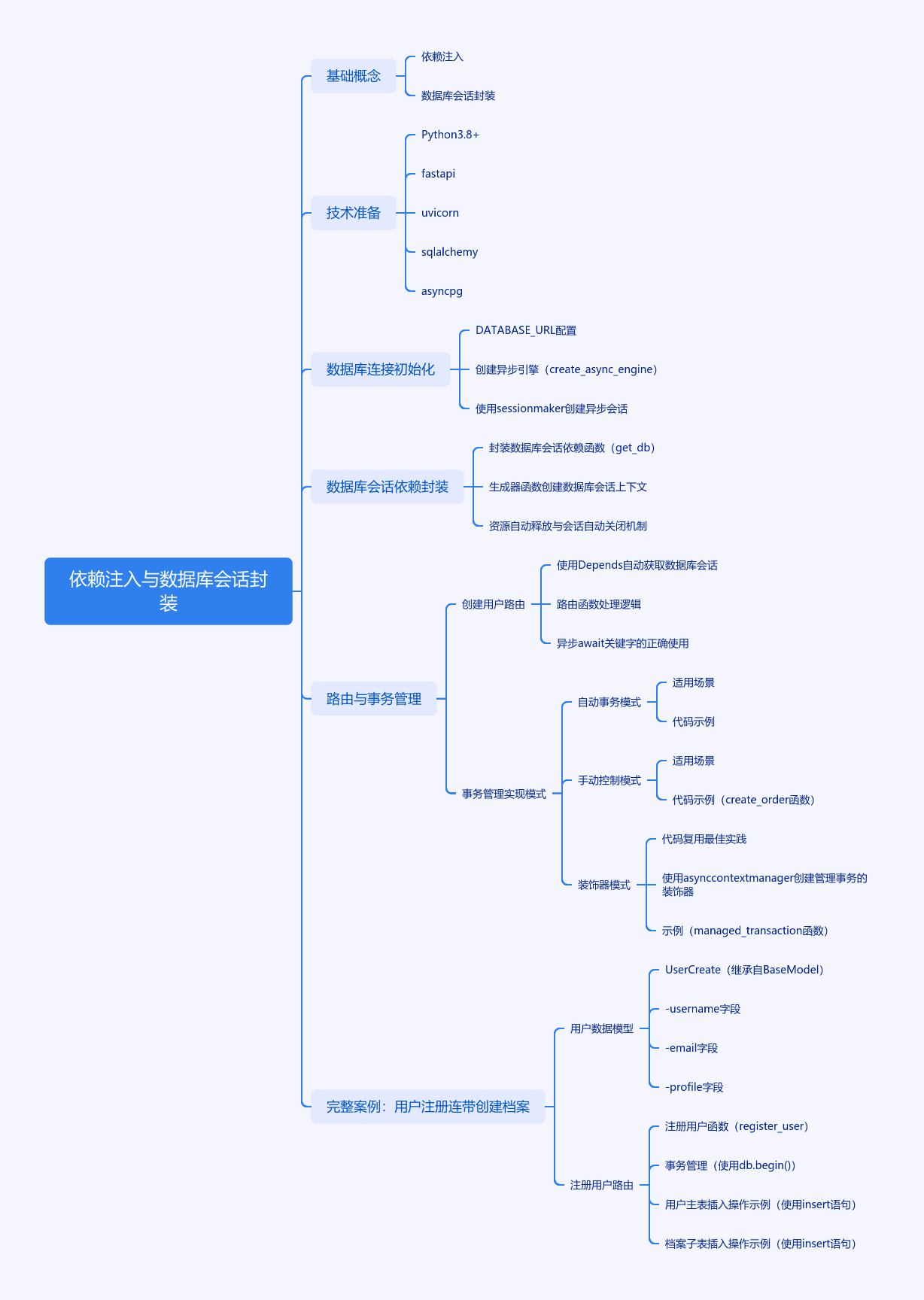

from fastapi import Depends, FastAPI
from sqlalchemy.ext.asyncio import AsyncSession, create_async_engine
from sqlalchemy.orm import sessionmaker

# 初始化数据库连接(使用异步引擎)
DATABASE_URL = "postgresql+asyncpg://user:password@localhost/dbname"
engine = create_async_engine(DATABASE_URL, echo=True)
async_session_maker = sessionmaker(engine, class_=AsyncSession, expire_on_commit=False)


# 封装数据库会话依赖
async def get_db() -> AsyncSession:
    """
    生成器函数创建数据库会话上下文
    使用yield代替return实现资源自动释放
    会话自动关闭机制保证连接池回收
    """
    async with async_session_maker() as session:
        try:
            yield session
        finally:
            await session.close()


app = FastAPI()


@app.post("/users/")
async def create_user(
        name: str,
        session: AsyncSession = Depends(get_db)
):
    """
    路由函数通过Depends自动获取数据库会话
    事务管理需要在业务逻辑中显式控制
    注意异步await关键字的正确使用
    """
    from sqlalchemy import text
    try:
        # 执行原生SQL示例(实际建议使用ORM)
        await session.execute(
            text("INSERT INTO users (name) VALUES (:name)"),
            {"name": name}
        )
        await session.commit()
        return {"status": "created"}
    except Exception as e:
        await session.rollback()
        raise HTTPException(500, str(e))
from fastapi import Depends
from databases import Database


async def transaction_wrapper(db: Database = Depends(get_db)):
    async with db.transaction():
        yield
@app.post("/orders/")
async def create_order(
        user_id: int,
        db: AsyncSession = Depends(get_db)
):
    try:
        await db.begin()
        # 执行多个数据库操作
        await db.commit()
    except SQLAlchemyError:
        await db.rollback()
        raise
from contextlib import asynccontextmanager


@asynccontextmanager
async def managed_transaction(db: AsyncSession):
    try:
        yield
        await db.commit()
    except Exception:
        await db.rollback()
        raise


# 在路由中使用
async def create_order(db: AsyncSession = Depends(get_db)):
    async with managed_transaction(db):
# 业务逻辑代码
from sqlalchemy import insert
from pydantic import BaseModel


class UserCreate(BaseModel):
    username: str
    email: str
    profile: dict


@app.post("/register/")
async def register_user(
        user_data: UserCreate,
        db: AsyncSession = Depends(get_db)
):
    async with db.begin():
        try:
            # 插入用户主表
            user_result = await db.execute(
                insert(users_table).values(
                    username=user_data.username,
                    email=user_data.email
                ).returning(users_table.c.id)
            )
            user_id = user_result.scalar()

            # 插入档案子表
            await db.execute(
                insert(profiles_table).values(
                    user_id=user_id,
                    **user_data.profile
                )
            )

            return {"user_id": user_id}

        except IntegrityError as e:
            await db.rollback()
            if "unique constraint" in str(e):
                raise HTTPException(400, "Username already exists")
            raise HTTPException(500, "Database error")
engine = create_async_engine(
    DATABASE_URL,
    pool_size=20,
    max_overflow=10,
    pool_timeout=30
)


评论
发表评论